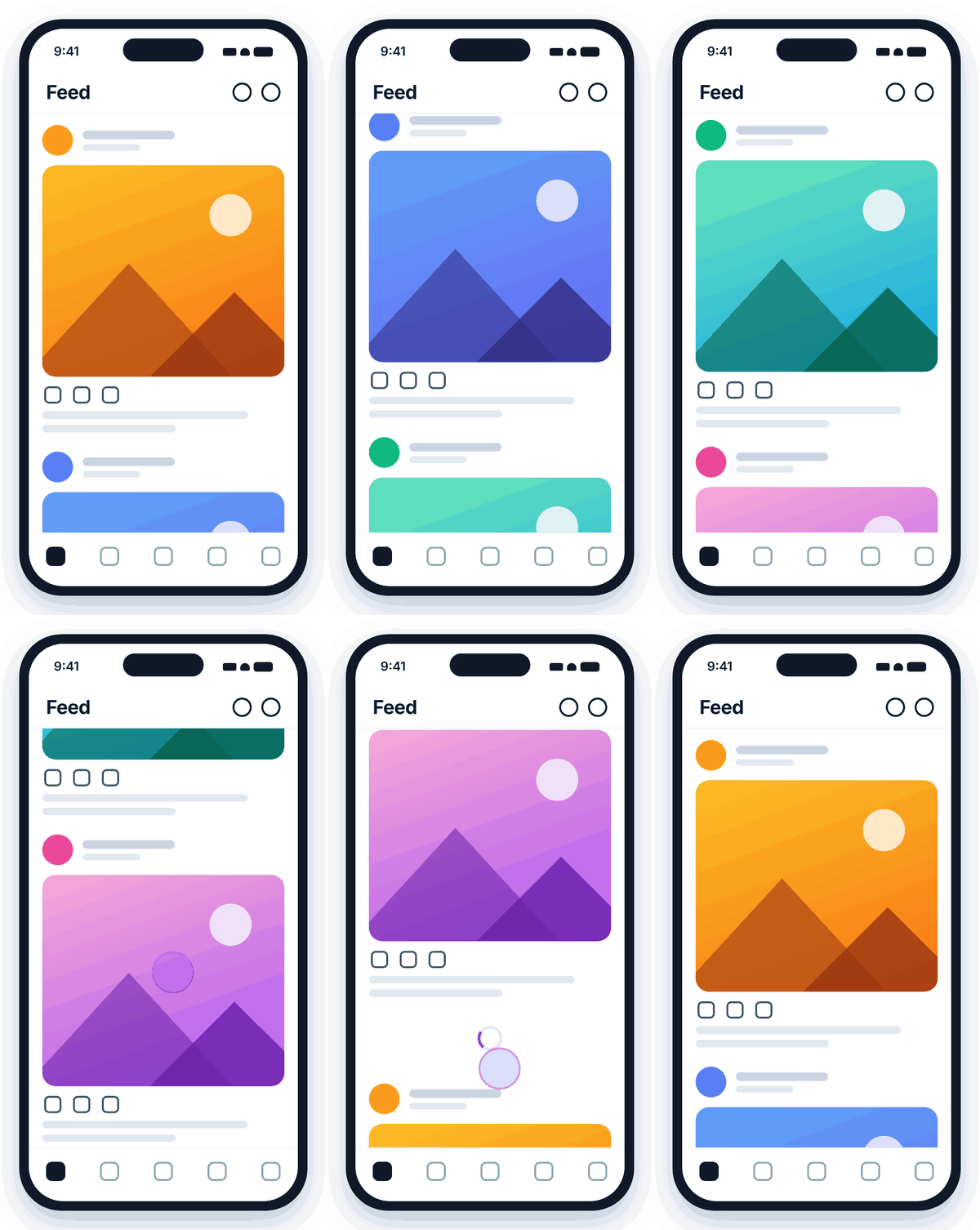
Infinite Scroll
New content loads automatically as the user scrolls down, so the feed never ends. By removing natural stopping points, it makes it easy to keep consuming content well beyond what was intended.
Examples: Social media feeds, e.g., Facebook, Instagram, and X/Twitter.
Casino Pull-to-Refresh
Swiping down reloads the page with an animation that may or may not reveal new content. Like a slot machine, the unpredictable outcome acts as a variable reward that encourages compulsive refreshing.
Examples: Mobile social media apps.
Neverending Autoplay
When a video ends, the next one starts automatically, while the option to stop it is hidden or not available. Users no longer need to decide whether to keep watching, which undermines their sense of agency.
Examples: YouTube's autoplay countdown; autoplaying videos and stories on Facebook and Instagram.
Guilty Pleasure Recommendations
Personalized suggestions target users' known weak spots, tempting them to consume more content. Users often end up regretting the time spent and feeling guilty afterwards.
Examples: Video recommendations on YouTube; suggested content on Facebook and Instagram.
Disguised Ads and Recommendations
Advertisements and recommendations are camouflaged as regular content, e.g., posts or stories from friends, so users engage with them without realizing what they are.
Examples: Sponsored posts and stories on Instagram and Facebook; suggested posts from non-followed accounts on X/Twitter.
Recapture Notifications
Notifications are deliberately sent to draw users back into the service, often about content or activity they never engaged with, starting new and unplanned usage sessions.
Examples: Activity alerts on Facebook; video suggestions from YouTube.
Playing by Appointment
The service dictates when users have to come back, and they risk losing points, progress, or rewards if they do not show up at the right time.
Examples: Crops to harvest in FarmVille; Snapchat streaks; BeReal's daily notification.
Grinding
Users have to repeat the same tedious tasks over and over to unlock achievements or rewards, artificially extending the time they spend on the service.
Examples: Experience points in online games, e.g., World of Warcraft; activity-based badges on social media.
Attentional Roach Motel
Getting into the service is easy, but getting out is hard: logging out, deactivating, or deleting an account requires hidden settings and many steps, keeping users attached.
Examples: Account logout and deletion flows on Facebook.
Time Fog
The interface hides or reduces cues about how much time has passed, so users lose track of their time.
Examples: Video players that do not show the elapsed time; full-screen mobile games that hide the device clock.
Fake Social Notifications
Messages pretend to come from other people or report social activity that the user never engaged with, exploiting social pressure to draw users back into the service.
Examples: "User X just joined" or "User X tweeted after a while" notifications; invitations sent on behalf of friends in games.